Maria · built 1931 · still travelling
Our travelling home. A story reaching back to 1931.
We begin with Maria as she is today, then follow her story backwards through every pair of hands that helped her survive.
Our chapter · 2019 to today
Our chapter began.
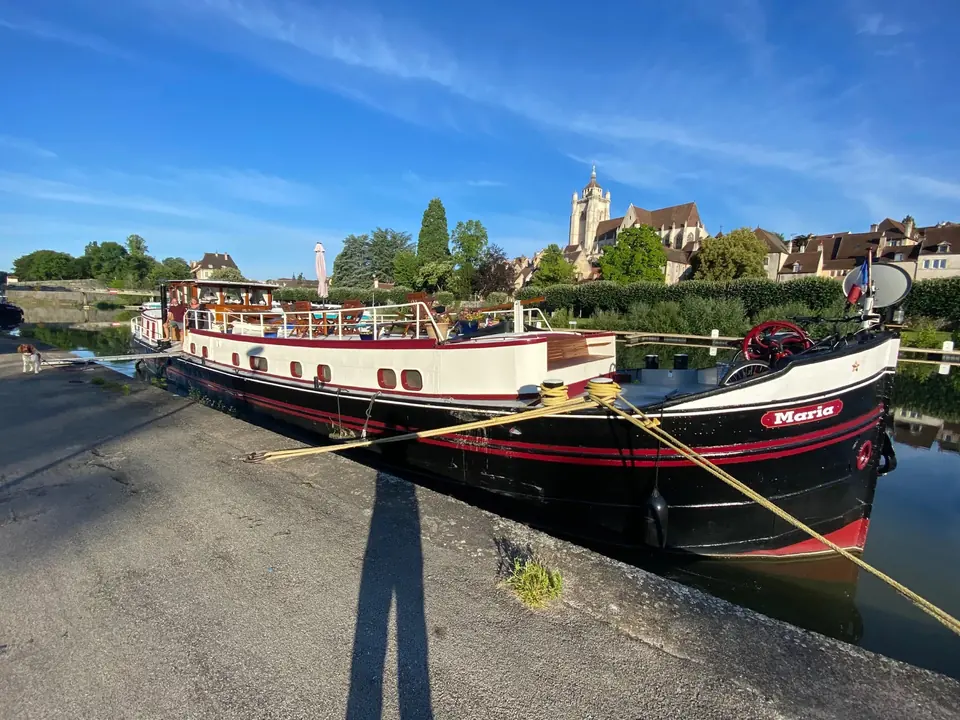
We bought Maria from Don and Patty at Saint-Jean-de-Losne. A hull survey and fresh blacking were the practical beginning; champagne and croissants marked the handover.
Maria is now our home on Europe’s rivers and canals. We are caring for her, travelling with Oscar and adding our own memories to a much longer story.
See the conversion as it lives on today
The engine, wheelhouse and saloon show how the 1990s rebuilding still shapes everyday life aboard.
Before us
Follow Maria back.
Four earlier chapters explain how a working cargo barge became the home we know today. Continue in order, or choose a date to go straight there.
Before us · 2002 to 2019
Seventeen years aboard.
Don and Patty cruised through Burgundy, Champagne, Alsace and Lorraine. Maria was their home and, for several years, a private-hire hotel boat welcoming guests aboard before returning to family cruising.
Open the newspaper and magazine records
Before Don and Patty · 2001 to 2002
Setting out.
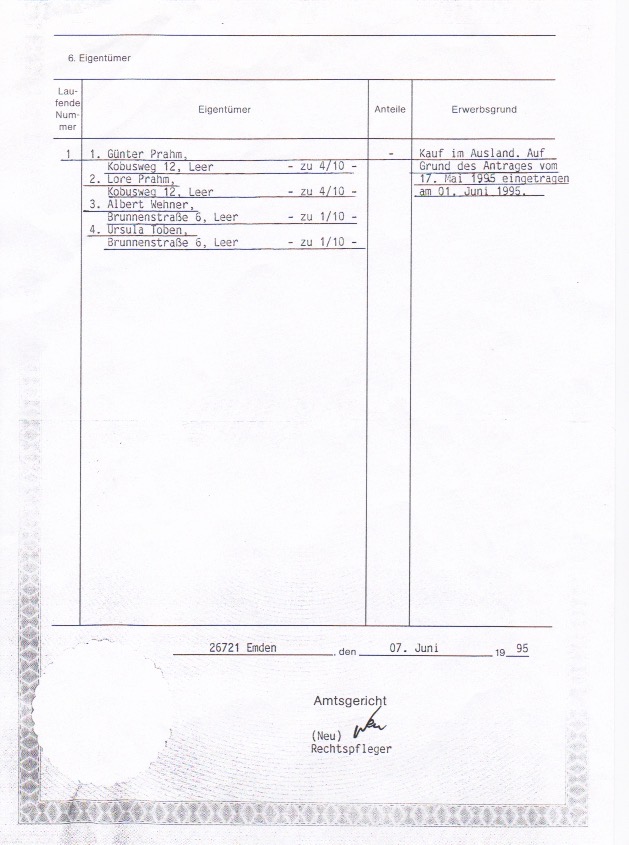
Dick and Debbie bought Maria from Günter and Lore Prahm in 2001. They were later owners, rather than members of the original four-person partnership. They prepared Maria for life aboard, adding skylights, a bow thruster, laundry equipment and navigation gear, then travelled through the Netherlands and Belgium to Épinal for the winter.
Before that · 1991 to 2001
The people who gave Maria a second life.
In autumn 1991, Günter Prahm and Albert Wehner rushed to Friesland after barely finishing a conversation about finding a Luxe Motor. They found Maria sitting quietly in a meadow. The following week Lore Prahm and Ursula Toben—Uschi—climbed aboard too.
For company, Maria had only a horse tied nearby.
At Kötter’s yard in Haren, Maria was cut open and shortened from 31 metres back to her original 25 metres. By spring 1992 she was sailing again.
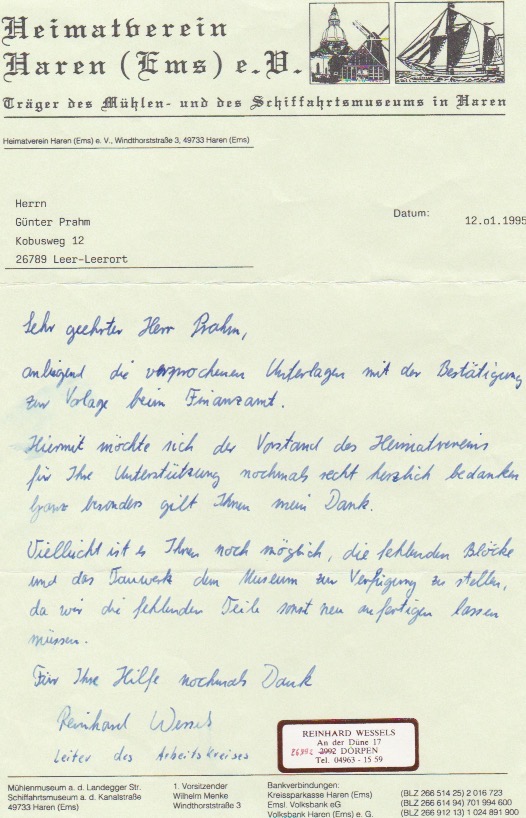
Maria’s original Kromhout engine was donated in October 1991 and is preserved at Haren’s Mühlen- und Schifffahrtsmuseum — the town’s Mill and Shipping Museum.
Open the reconstruction photographs and original records
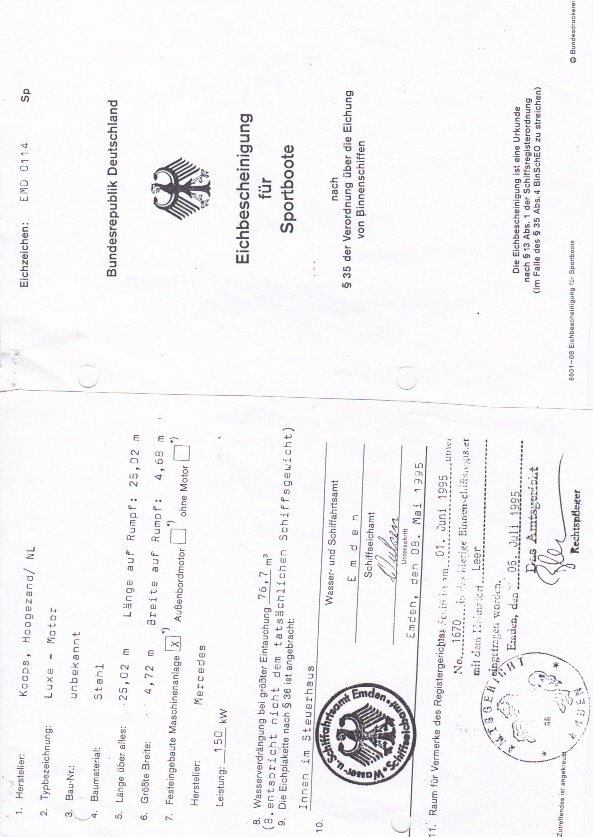
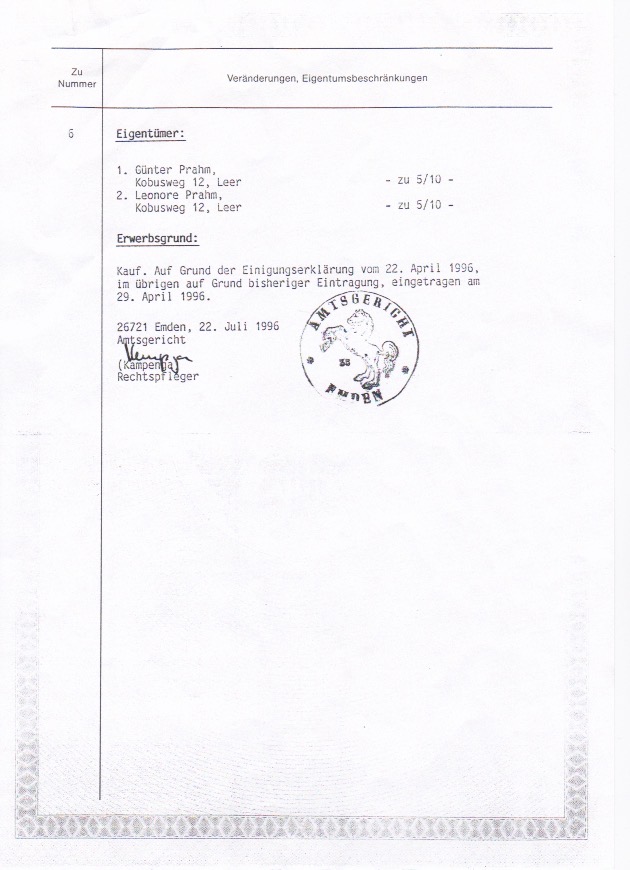
The complete archive shows the working hull they found, the scale of the reconstruction, the former engine and the surviving written evidence.

See how the aft cabin changed across the years
At the beginning · 1931 to 1991
Sixty years carrying cargo.
Maria was built at Coops in Hoogezand in 1931. The Kok family owned and worked her for around sixty years. Her riveted-steel hull and practical proportions belong to this longest chapter of her life.
The surviving records identify her as Maria and record her 1931 build at Coops. By 1991 she had been lengthened to 31 metres; the restoration returned her to her original 25-metre length.
Open the early records and research image
These records establish Maria’s official identity. The Heerenveen postcard is kept separately because Maria’s presence in it has never been proven.

Continue exploring
Maria, seen through a lens.
The next chapter brings together the places, weather and everyday moments recorded along the way.
Continue to Photography